

Belinda Mathers
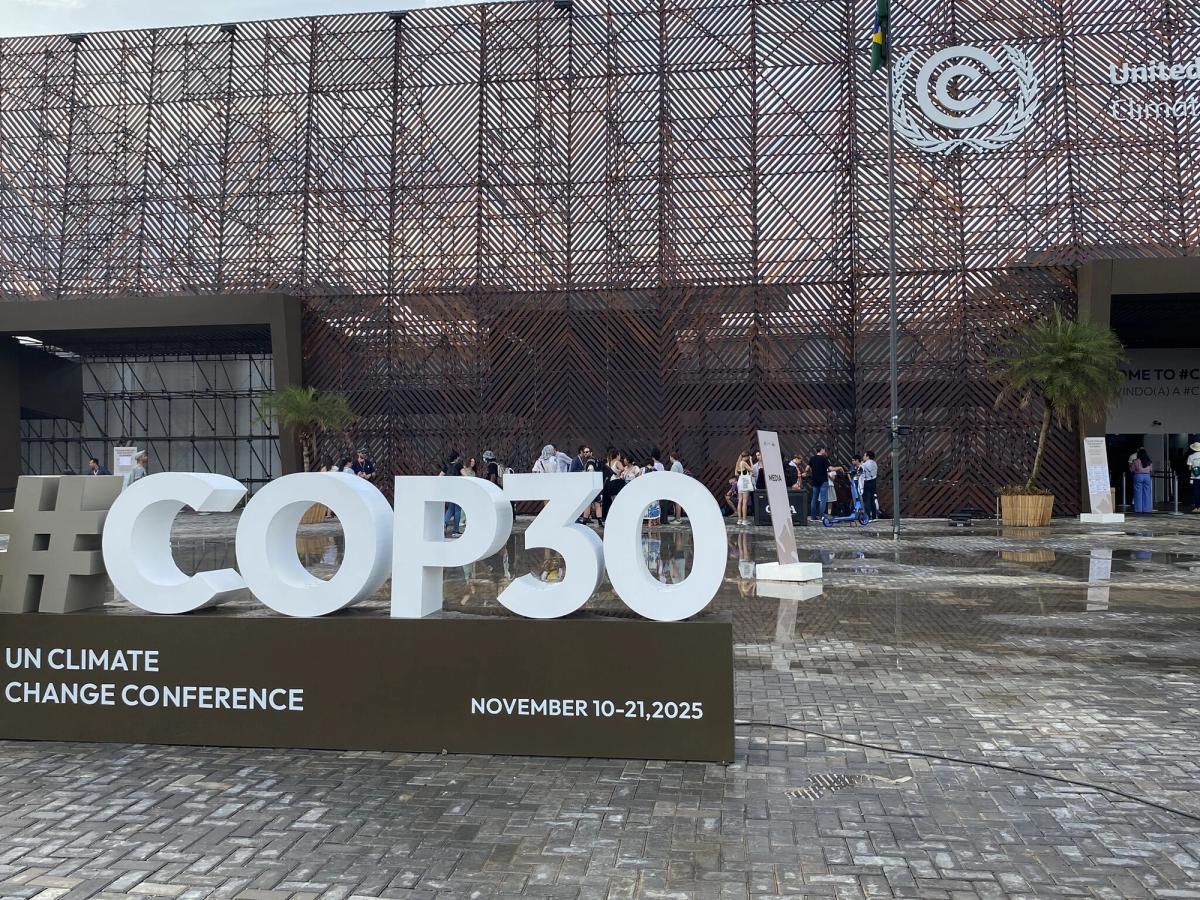
Our Chief Science and Integrity Officer attended COP30 in Belém, Brazil and offers these insights from the business-focused blue zone of the conference.
COP30 in Belém was billed as the “COP of implementation.” While governments debated and negotiated the text of agreements, the sessions in the blue zone pavilions focused on actions on ground and the message from there was clear: business cannot wait. The private sector must integrate climate, nature, adaptation, and resilience into its core strategies.
Nature: Embedding biodiversity in the balance sheet
We can’t fix climate without leaning into action for nature and biodiversity – if we don’t bring nature into company P&Ls, we don’t have a chance. COP30’s government-level “Belém Mission to 1.5” tied biodiversity directly to climate goals, spotlighting forests and oceans as critical carbon sinks. Yet without developing clear corresponding business KPIs, companies cannot measure progress. Over half of global supply chains rely on nature, but few firms embed it into profit-and-loss statements. COP30’s call for information integrity is a reminder: if nature isn’t in the ledger, it isn’t in the strategy.
Adaptation: From public good to shared value
There is a desire and willingness for the private sector to fund adaptation if the right mechanisms and drivers can be found. The summit’s strongest government-level outcome was a pledge to triple adaptation finance. Evidence shows every $1 invested in adaptation yields up to $10 in public benefit. But businesses cannot be expected to fund purely public goods. COP30 emphasised adaptation must be people-centred as well as nature-centred, ensuring communities — especially indigenous communities in the Amazon and beyond — benefit directly. The private sector’s role is to co-invest in resilience mechanisms that protect both ecosystems and livelihoods.
Economics: Incentivising landholders
If prices are higher for environmentally sustainable products, it is not economically sustainable in the long term. COP30 highlighted the economic paradox: sustainable products often cost more, yet landholders rarely see fair returns. The government-level “Global Implementation Accelerator” launched in Belém aims to channel finance toward those delivering environmental outcomes. Unless farmers, Indigenous peoples, and land stewards are rewarded economically, sustainability will remain a luxury label rather than a mainstream practice.
Climate risk and investments: Resilience goes mainstream
Australia has seen a 40% increase in factoring climate risk into investment decisions, mirroring COP30’s broader trend: resilience is now a fiduciary responsibility. Financial institutions showcased how climate risk is embedded into portfolios. This is no longer about ESG branding — it is about protecting assets from becoming stranded in a warming world.
Disclosure: Data as the foundation of trust
COP30’s emphasis on information integrity resonates with investors. Rolling back disclosure requirements undermines confidence. Without transparent data, financial institutions cannot assess exposure to climate shocks. Disclosure is not red tape; it is the bedrock of functioning markets.
Certification harmonisation: Cutting through the noise
Certification bodies are important because they drive integrity and show what good looks like. With many standards and frameworks in the market, it is hard for investors to get their heads around them. Belém highlighted the confusion of overlapping standards and COP30 called for harmonisation, streamlining reporting so capital can flow more efficiently toward credible climate solutions.
Governance: From goals to financed plans
To get Board support for climate action, it is important to connect environmental impacts to business risks and opportunities. Boards need more than aspirational targets; they need financed, timebound plans. COP30 showcased case studies of Indigenous-led conservation and corporate decarbonisation, proving that connecting environmental impacts to business risks is practical governance. The difference between a goal and a funded plan is the difference between aspiration and accountability.
Small Businesses: The missing middle
SMEs are the backbone of economies — they are globally responsible for 50% of GDP and emissions. Yet COP30 revealed they remain under-supported. The “Global Mutirão” (collective effort) stressed inclusivity, but SMEs still lack resources and guidance. Without tailored finance and support, the climate transition risks becoming a privilege of large corporations.
Conclusion: Implementation necessary now
COP30 may not have delivered the breakthrough many hoped for, but it was a pivot toward implementation. For business, the message is clear: integrate nature into P&Ls, co-finance adaptation, reward landholders, embed climate risk, demand disclosure, harmonise standards, strengthen governance, and empower SMEs. Anything less is not just bad for the planet — it is bad for business.